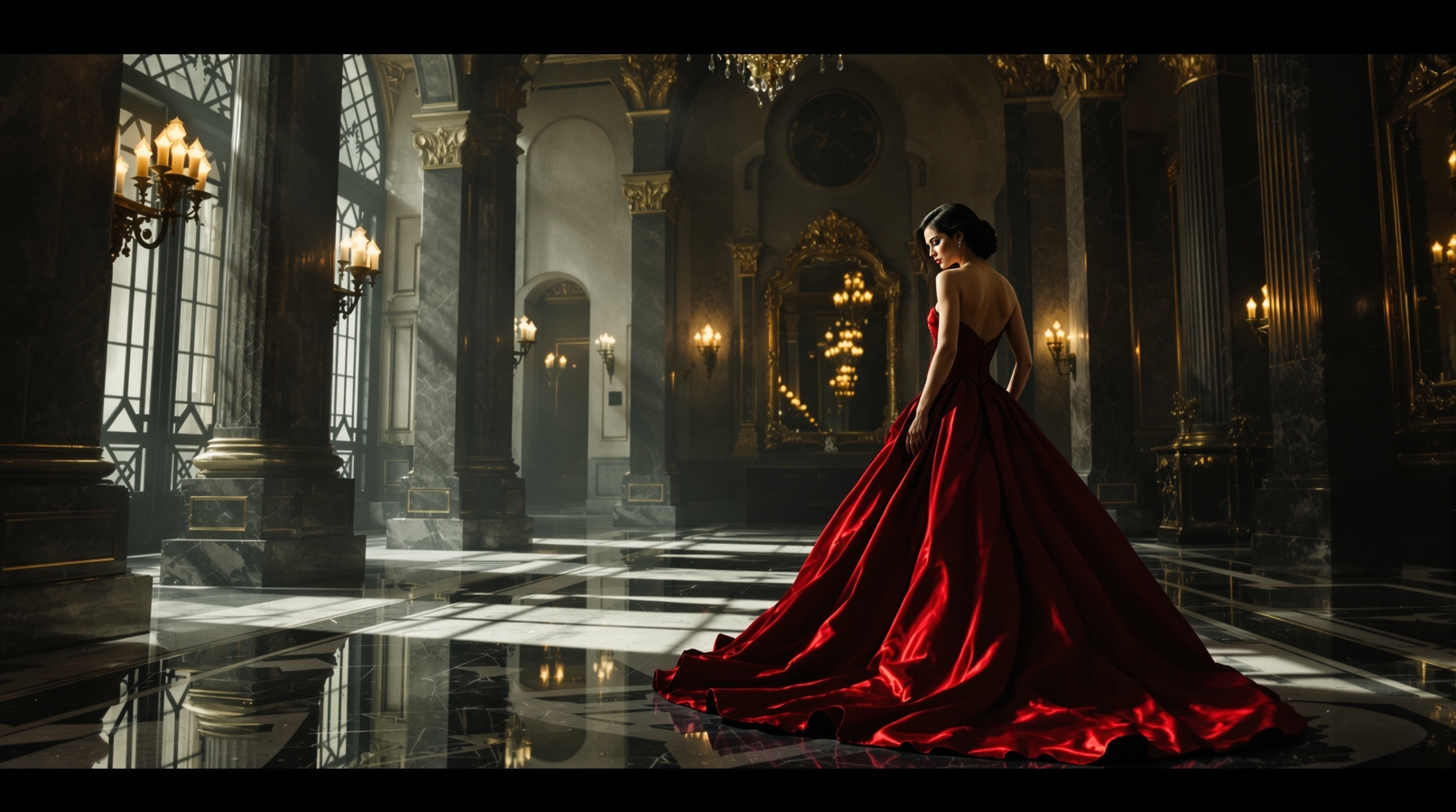
A vertical drama is a scripted series made for a phone screen: shot in a tall portrait frame and released in many short episodes, so a full story unfolds across quick sessions instead of hour-long TV blocks. Zenga TV is built entirely around that idea — you browse in a browser, tap a series, and watch chapter after chapter in portrait wherever you happen to be. Because every episode is a small chapter rather than an evening's commitment, the storytelling is designed around momentum: a hook in the opening seconds, a decision or a reveal by the end, and a reason to tap the next one.
How a vertical series differs from a traditional TV series
A traditional series spreads a story across a handful of long episodes. A vertical series does the opposite: it takes the same emotional arc and breaks it into dozens of small ones. On Zenga TV that range is wide and visible on the catalogue — A Love Worth Fighting For wraps up in 30 episodes, while Revenge of the Heiress runs to 72.
Episode counts are much higher than they look
Because each episode is short, a series can carry far more of them without asking for more of your evening. The practical effect is that you judge a series by how many chapters it has left, not by how many hours it will cost you. A 30-episode series is a single sitting kind of evening; a 72-episode one is a weekly habit.
Every episode has to earn the next tap
In long-form television a quiet episode can coast on the season around it. In short-form drama there is no room for that. Each episode is built to end on a turn — a refusal, a knock at the door, a name said out loud — so that stopping feels like a decision rather than a natural pause. This is why binge-watching a vertical series feels different from binge-watching television: the unit of suspense is much smaller.
Why the portrait frame changes how scenes are shot
A 9:16 frame is narrow and tall, and that single constraint shapes almost every creative choice in the format. Wide establishing shots that set a scene in television have nowhere to breathe, so directors lean on faces, gestures and depth instead — a doorway at the end of a corridor, a staircase, a figure standing at the far end of a hall.
Closer camera, simpler blocking
Scenes tend to stay with two people in one space rather than cutting between locations. Performance carries more weight because the audience is close enough to read a flicker of hesitation. Sets are composed upward — tall windows, chandeliers, columns — because the frame rewards vertical composition.
Designed for one hand and half an eye
The format assumes you are holding the screen, often with a thumb ready to scroll. That is why overlays stay small, why the important information sits near the edges, and why a scene rarely asks you to spot a detail in a crowded wide shot. Subtlety is scaled up deliberately rather than lost.
Which genres work best in the format
The format rewards stories with strong emotional stakes and a clear question. On Zenga TV the catalogue covers Romance, Revenge, CEO, Billionaire, Family, Mystery, Thriller, Historical and Fantasy — and a few series happily sit in more than one.
 Revenge of the HeiressRevenge · 72 episodes · 4.9 rating
 The CEO's Secret BrideRomance · 48 episodes · 4.8 rating
 Midnight SnowRomance · 42 episodes · 4.8 rating
Romance dominates because a will-they-or-won't-they question can be reopened in every episode. Revenge works for the same reason in reverse: each chapter can deliver one small, satisfying payoff. CEO and Billionaire stories add scale and contrast to a narrow frame — glass towers, boardrooms, a life far from your own. Mystery and Thriller use the tight crop to hide information just out of view, and Historical and Fantasy use costume and texture to fill the tall frame.
Are the episodes free or paid?
It depends on the series, and Zenga TV is deliberately explicit about it. Some titles are completely free to watch. Others are marked VIP and need a membership. Many sit in between: the opening episodes are free, and later ones are unlocked with coins or a VIP subscription.
Free, coin-unlock and VIP — what the difference means in practice
A free series carries no barrier at all. The Substitute Bride runs 55 episodes with every one of them open, and A Love Worth Fighting For is free and already completed at 30 episodes. A VIP series such as Married to My Enemy or The Mafia King's Vow is built for members from the start. Everything else follows the middle path: you watch the first stretch for free, then use coins or a membership to keep going.
Coins are a one-at-a-time unlock — you spend them on the specific episode you want next, from your Zenga Coins wallet. VIP is the blanket option: it opens VIP episodes and reduces interruptions in one go, which is what you want if you plan to finish several series rather than sample one. Neither path hides the cost from you; the episode tells you it is locked and what unlocking it takes before you commit.
Check the shape of the series before you start
If you are settling in for the night, a completed series is the better choice — the whole run is there and the story resolves. If you like following something as it lands, an ongoing series suits you better, and new dramas arrive on the site every week. Either way, the detail page shows episode count, status, language, subtitles and rating side by side, so you can decide with the facts in front of you instead of discovering them at episode twelve.
How to start watching on Zenga TV
Pick a series by mood, not by title
With dozens of series on the shelf, choosing by feeling is faster than scrolling. Want warmth and longing? Start in Romance. Want the satisfaction of someone getting what they deserve? Go to Revenge. Want scale, power and a contract that should never have been signed? CEO and Billionaire. Each genre has its own page, and the mood row on the home page does the same job in one tap.
Then read the detail page like a label
Four things tell you almost everything: the episode count tells you the commitment, the status tells you whether the story is finished, the rating tells you how other viewers felt, and the free or VIP marking tells you what it will cost. A 4.9 rating on a 72-episode completed series and a 4.8 on a 48-episode ongoing one are promising in completely different ways.
If you would rather just see what is there, the full catalogue lives at Discover — filter by genre, sort by what is popular or newest, and open anything that catches your eye. That is genuinely the best way to understand the format: watch the first three episodes of one series and the shape of it will make sense immediately.
Frequently asked questions
Can I watch in a desktop browser, or is it phone only?
You can open Zenga TV in a desktop browser and everything works, but the video itself was shot for a tall screen. On a large display the player keeps the portrait framing instead of stretching into a wide letterbox, which is the honest way to watch content made for a phone.
Do I need to install an app?
No. Zenga TV runs in the browser, so a link is all you need — the same catalogue and the same progress on whatever device you open it on.
Can I pick up a series where I left off?
Yes. Continue Watching on the home page keeps the episode you were on, so you can stop halfway through a series and come back without hunting for the right chapter.
What does VIP actually change for me?
Two things: series and episodes marked VIP open up, and you see fewer interruptions between episodes. Everything else — browsing, free episodes, genres, your list — stays the same.
Ready to see one for yourself?
Browse dramas by genre, mood and rating at your own pace.